Trained Intent Router
A lightweight classifier routes confident user queries locally and falls back to one LLM call only when uncertain; every decision logs to intent_decisions.
GraphRecall turns what you read—PDFs, notes, links, and YouTube—into a personal knowledge graph, brings concepts back in a calm feed instead of homework, and lets AI agents read your real knowledge profile over MCP.
Real simulator footage of the GraphRecall iOS build, live resume audit scoring, and MCP trace flow.
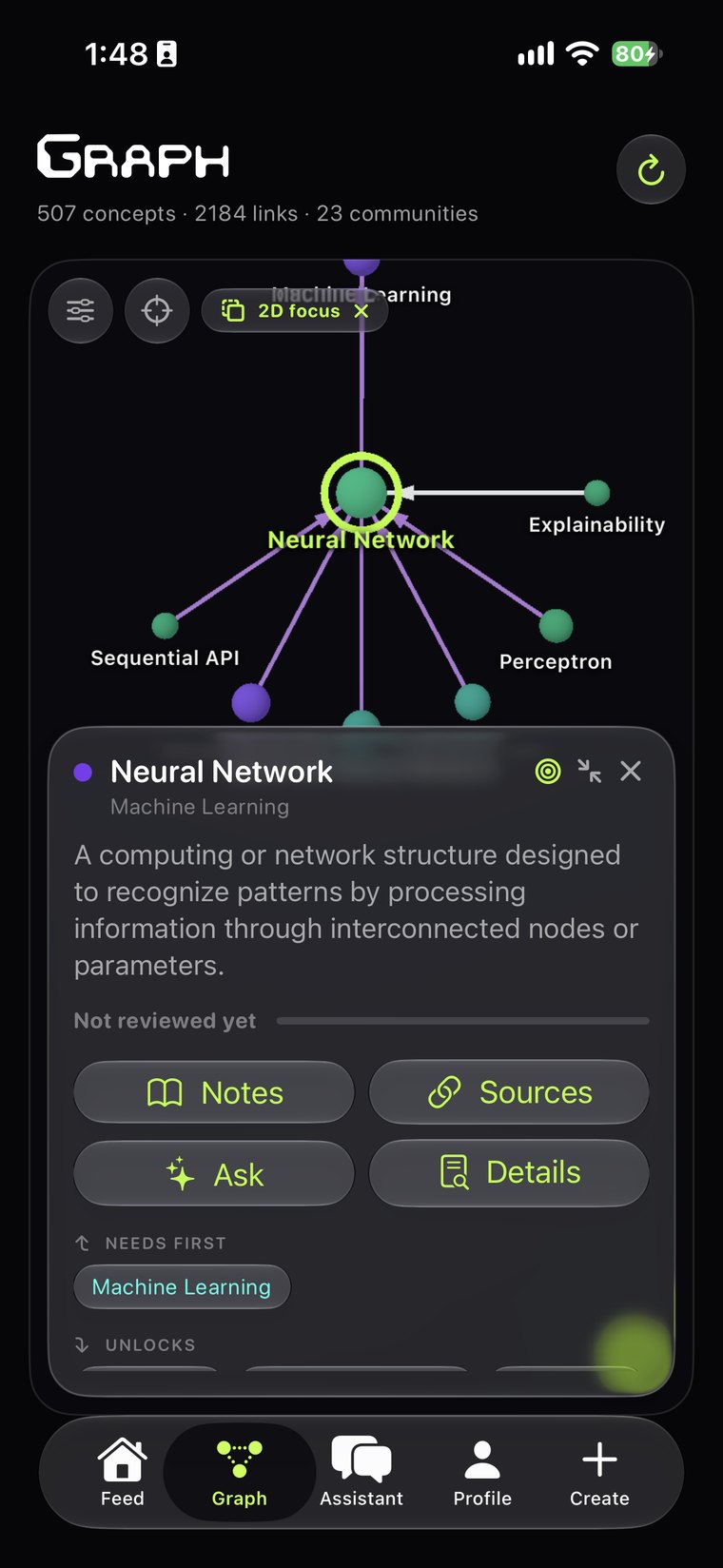
Concepts connect with directed, typed edges—prerequisite →, subtopic, and builds on—and cluster into 23 named communities so the overview never collapses into a tangled hairball. Tap any concept to isolate its immediate prerequisites and what it unlocks.
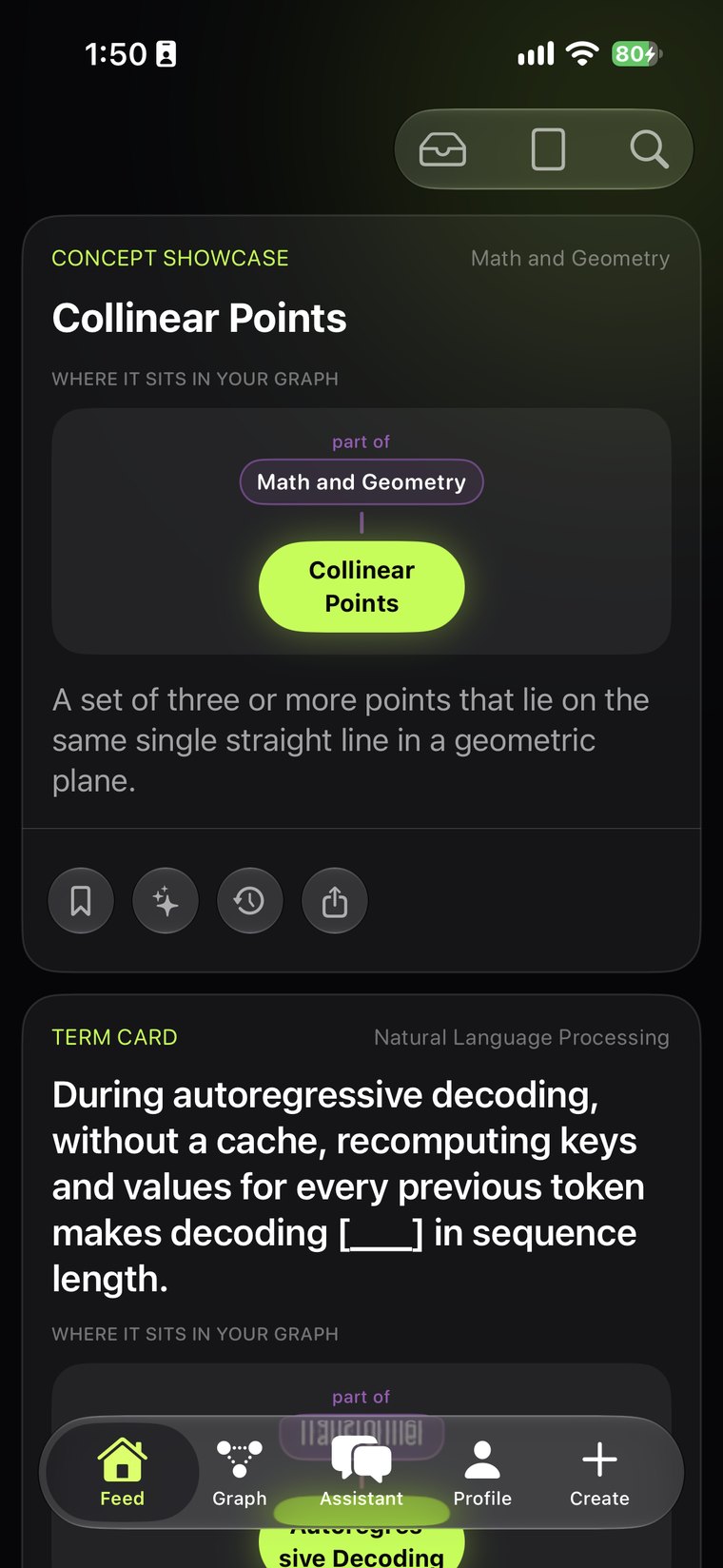
Your concepts return in a natural-height social timeline—concept showcases, term clozes, multiple-choice quizzes, and runnable code sandboxes. Rate your confidence on Apple’s native stepped slider to update spaced-repetition intervals, or tap Remind me on any card to bring it back later.
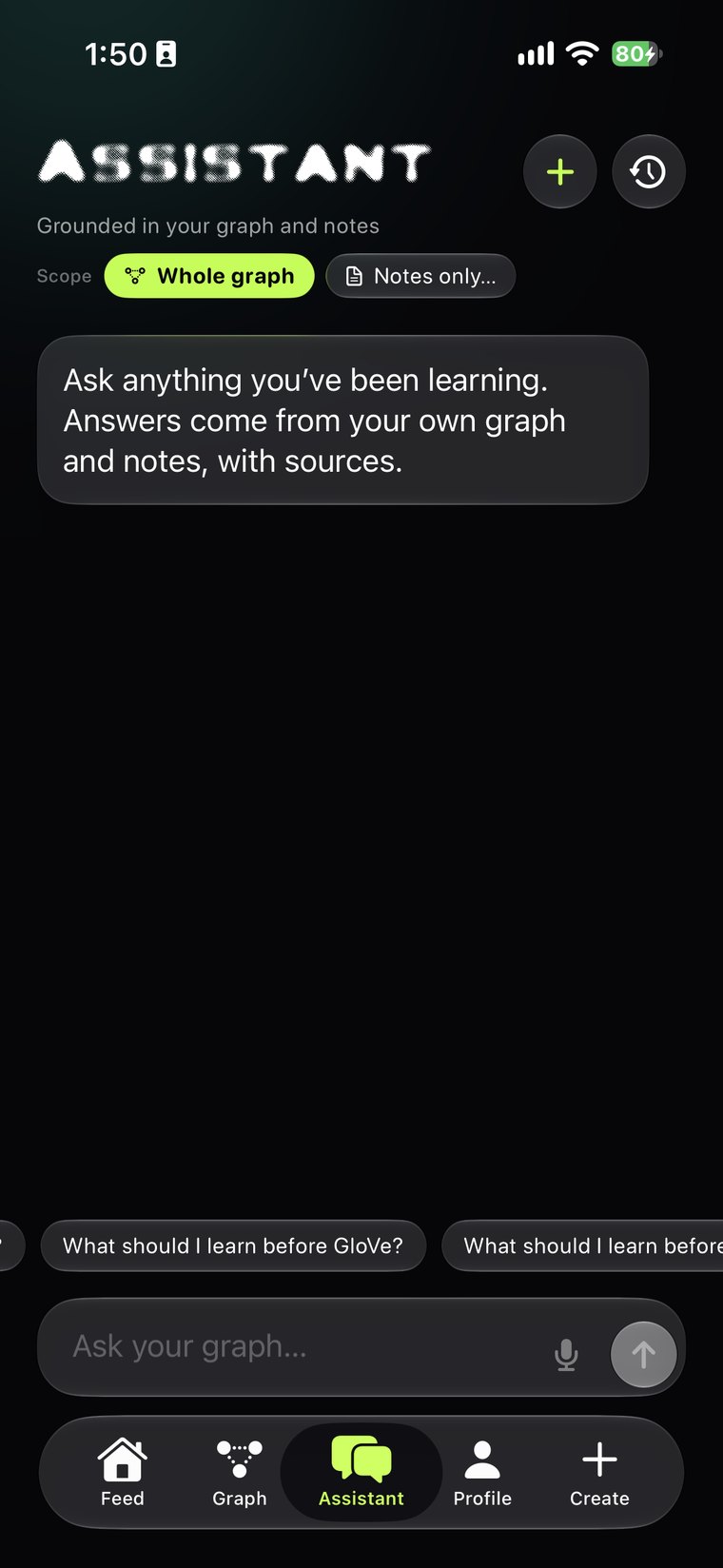
Every reply retrieves from your own notes and graph with numbered sources. Below the chat, three Ask next chips are picked directly from your graph—a shaky prerequisite, an unstudied subtopic, or what the concept unlocks—computed in ~0.2 s with zero LLM calls and logged by click kind.
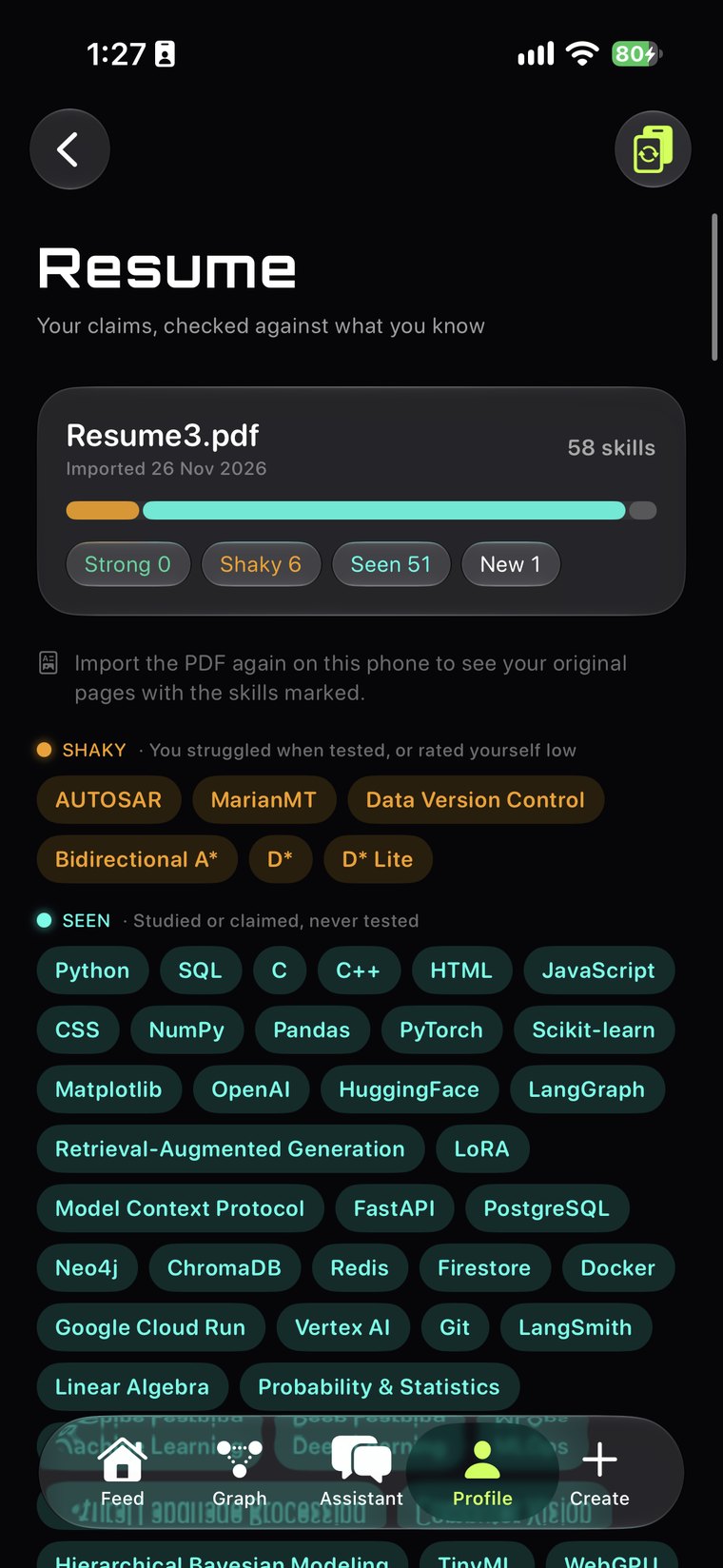
Every skill listed on your resume is scored against your graph history—58 checked skills on the test profile (0 strong · 6 shaky · 51 seen · 1 new), with an on-device PDF overlay when imported locally. In Create → LeetCode, typing a problem number like 146 fetches title, difficulty, topic tags, and a suggested pattern from LeetCode’s public API while scheduling problem and mistake reviews.
Generated via backend/scripts/generate_concept_illustrations.py (9 concept illustrations produced cleanly) to anchor abstract ML architectures inside feed cards.
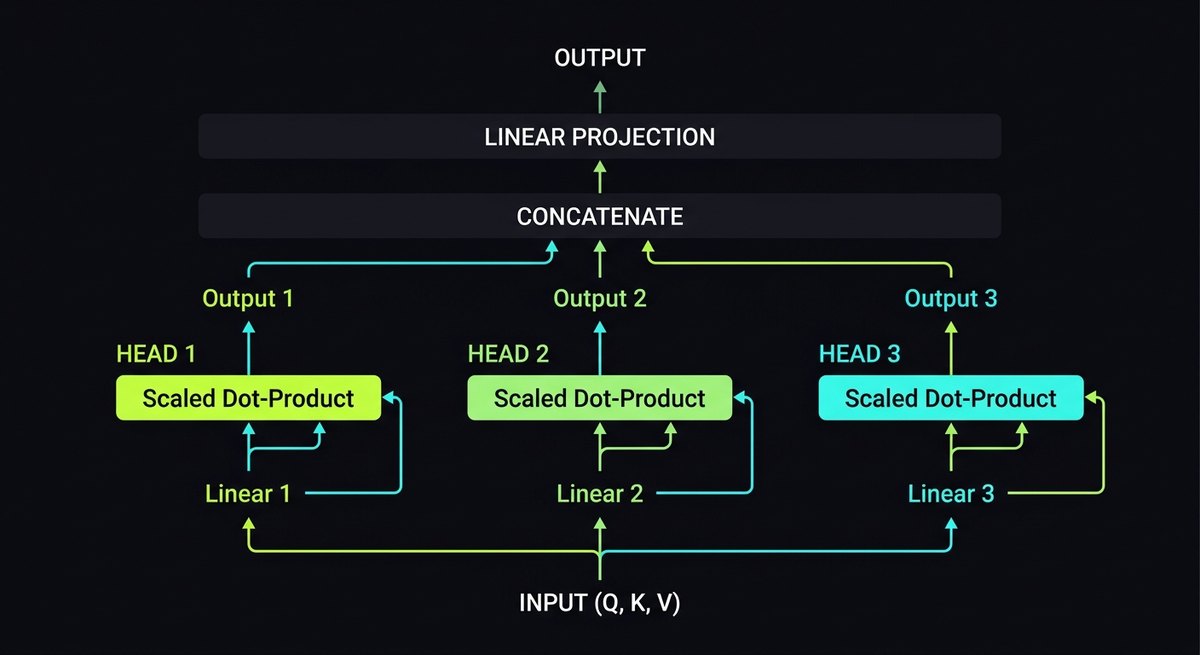
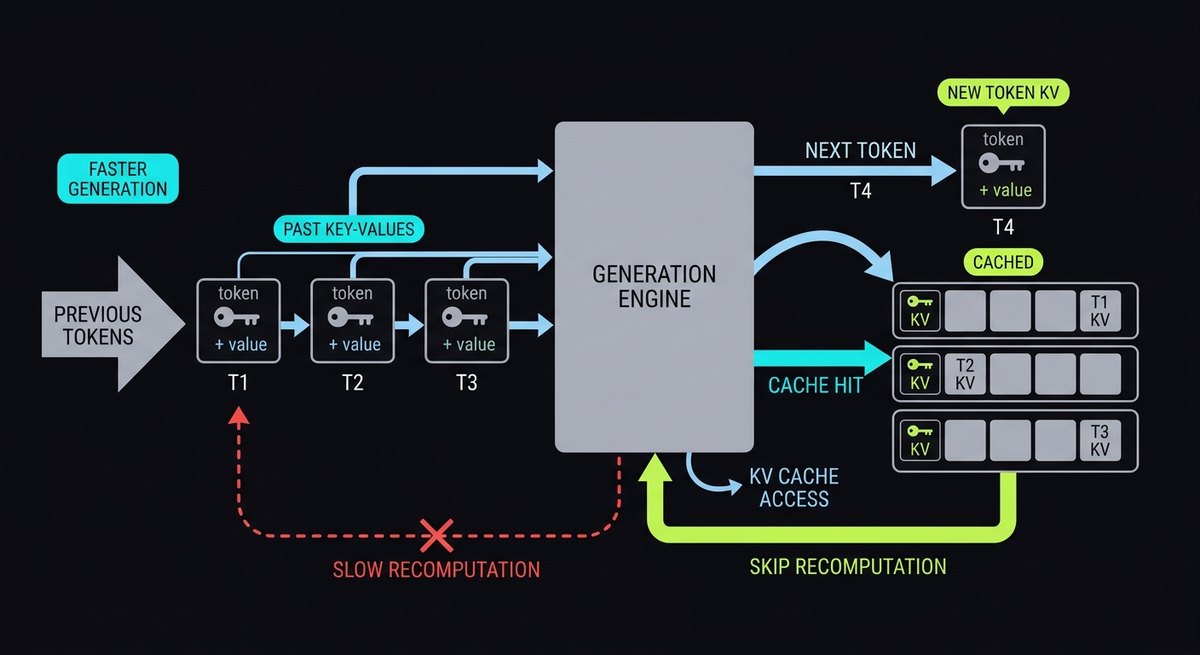
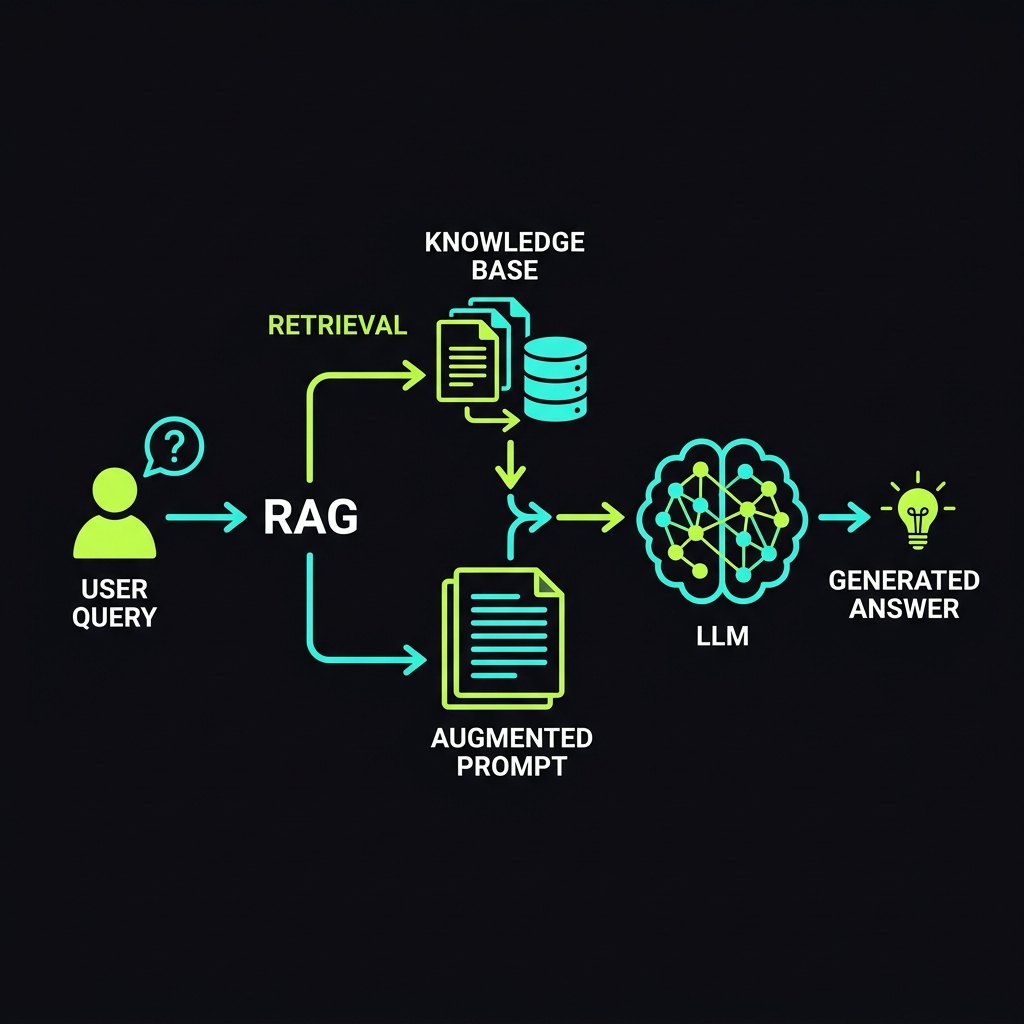
Built with explicit latency, grounding, and security boundaries across mobile, graph, and agent layers.
A lightweight classifier routes confident user queries locally and falls back to one LLM call only when uncertain; every decision logs to intent_decisions.
Cached answers partition cleanly by user corpus version, guaranteeing that deleted or edited notes are never served from stale cache entries.
Selects one shaky prerequisite, one unstudied subtopic, and one unlocked concept straight from Neo4j + proficiency scores in ~0.2 s with zero LLM tokens.
Computes memory stability and intervals via FSRS (spaced_repetition.py), automatically backtracking along prerequisite edges when recall slips.
Exposes get_knowledge_frontier (anchors, shaky frontier, gaps, misconceptions, provenance, profile hash) and record_exposure write-back via scoped grk_ keys. OAuth 2.1 + PKCE is built in code (not yet publicly hosted).
Serves Subject → Community → Concept hierarchy & recall-outline APIs, live dictation-to-graph SSE streaming, generalized RSS/Medium/YouTube + signed newsletter webhooks, and Flash-Lite nightly batch runs with usage_daily cost tracking (backend APIs shipped; iOS UI wiring next).